

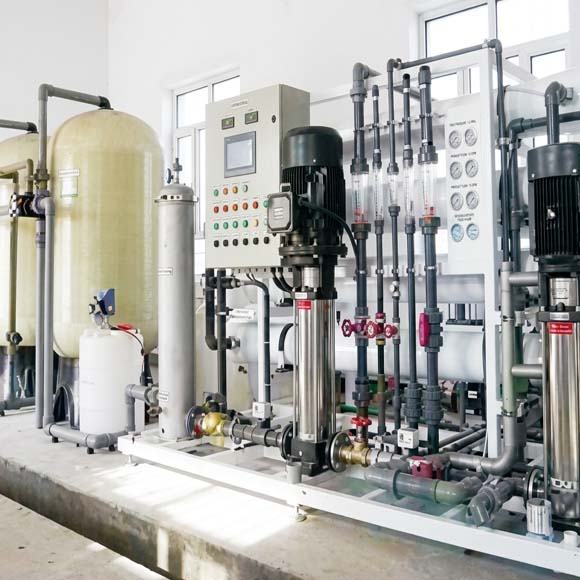
A Reverse Osmosis (RO) Plant is an advanced water purification system that uses a semi-permeable membrane to remove dissolved salts, minerals, chemicals, and other impurities from water. The process forces water through the membrane under pressure, allowing only pure water molecules to pass while rejecting contaminants. RO plants are widely used for producing safe, clean, and high-quality water for drinking, industrial processes, and commercial applications.
The RO treatment process typically includes multiple stages such as pre-filtration, activated carbon filtration, micron filtration, reverse osmosis membranes, and post-treatment systems. During operation, raw water is pressurized and passed through the RO membrane, which effectively removes Total Dissolved Solids (TDS), heavy metals, bacteria, viruses, and other harmful contaminants. The purified water is collected for use, while the concentrated reject water containing impurities is discharged separately.
Reverse Osmosis Plants are highly efficient and capable of delivering consistent water quality even from challenging water sources. They help improve taste, odor, and clarity while protecting downstream equipment from scaling and contamination. With proper maintenance, periodic membrane cleaning, and timely replacement of filters, RO plants provide a reliable and cost-effective solution for long-term water purification requirements across various industries.